Overtourism
A permanent déjà vu, maintained for a population that changes daily.
Overtourism is not, first of all, a density of visitors. It is the temporal loop a place enters when its daily rotation of guests requires it to be recognisable on arrival. The historic centre gets repaved to match the brochure that promised it. The shopfronts standardise. The vernacular is compressed into the format a phone can capture in three seconds. Every visitor arrives at a place they have already seen; every visitor leaves before the place can remember them. The city cannot age. It cannot forget. It cannot be surprised.
UNSEASONED is a boardgame produced industrially in a single copy during a design course at the Istituto Europeo di Design in Cagliari — an object that sits between artefact, satire, and pedagogic exercise. Around its board the loop is simulated at scale 1:1: players compete to season, price, and disgorge a seaside that never gets to be off- season. The trailer above assembles its figures — the pink-swimsuit smoker, the seagulls circling for scraps, the goat improvising a shoreline — as extras in the same economy the board itself models.
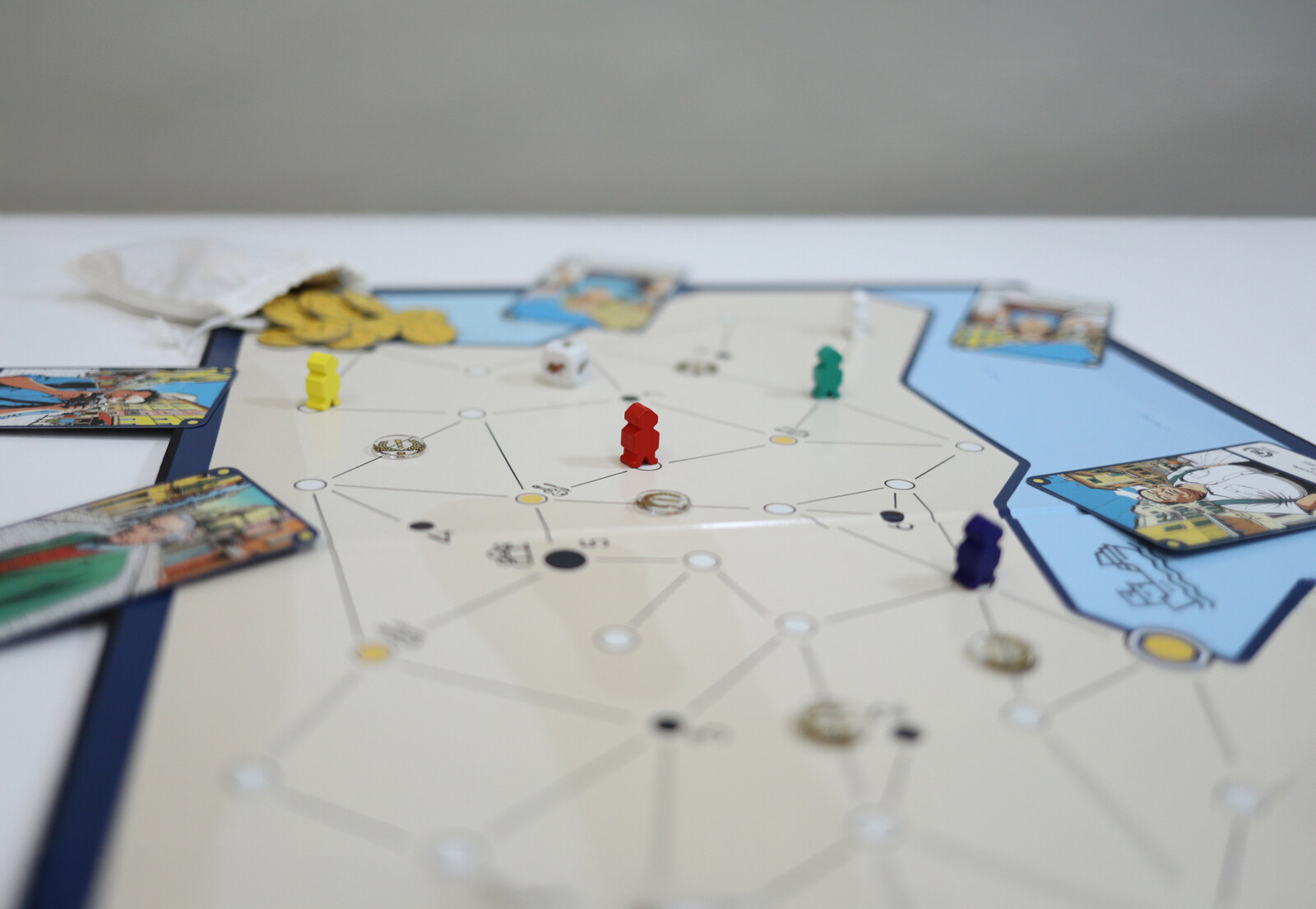
The impoverishment is double. The place loses the capacity to change — its residents, its rhythms, its idle hours are all optimised for a customer who won't be back. The visitor loses the capacity to be somewhere — the itinerary is a checklist of what has already been photographed, and the return home is the moment the photographs are sorted into the same folders as everyone else's. Both sides are drained by the same loop, running at industrial cadence.

The synthetic passenger eating a fried drumstick on the promenade deck is not satire. She is a market segment: an older customer with disposable income and photogenic jewellery, generated by the same optimisation loop that priced her cabin. She has never boarded a ship and never won't. The advertising doesn't need her to exist — it needs her to be recognisable.

Authenticity, priced per night.
Fifteen decks of standardised leisure dock in a port whose historic centre has already been repaved to match the brochure. The vessel refuels, disgorges, reboards, and leaves before dinner. The residents who still live behind the postcard have learned not to look up. The class that cannot afford a home has learned to rent one for the weekend, one weekend at a time, until the streetplan is a themepark of its own memory.
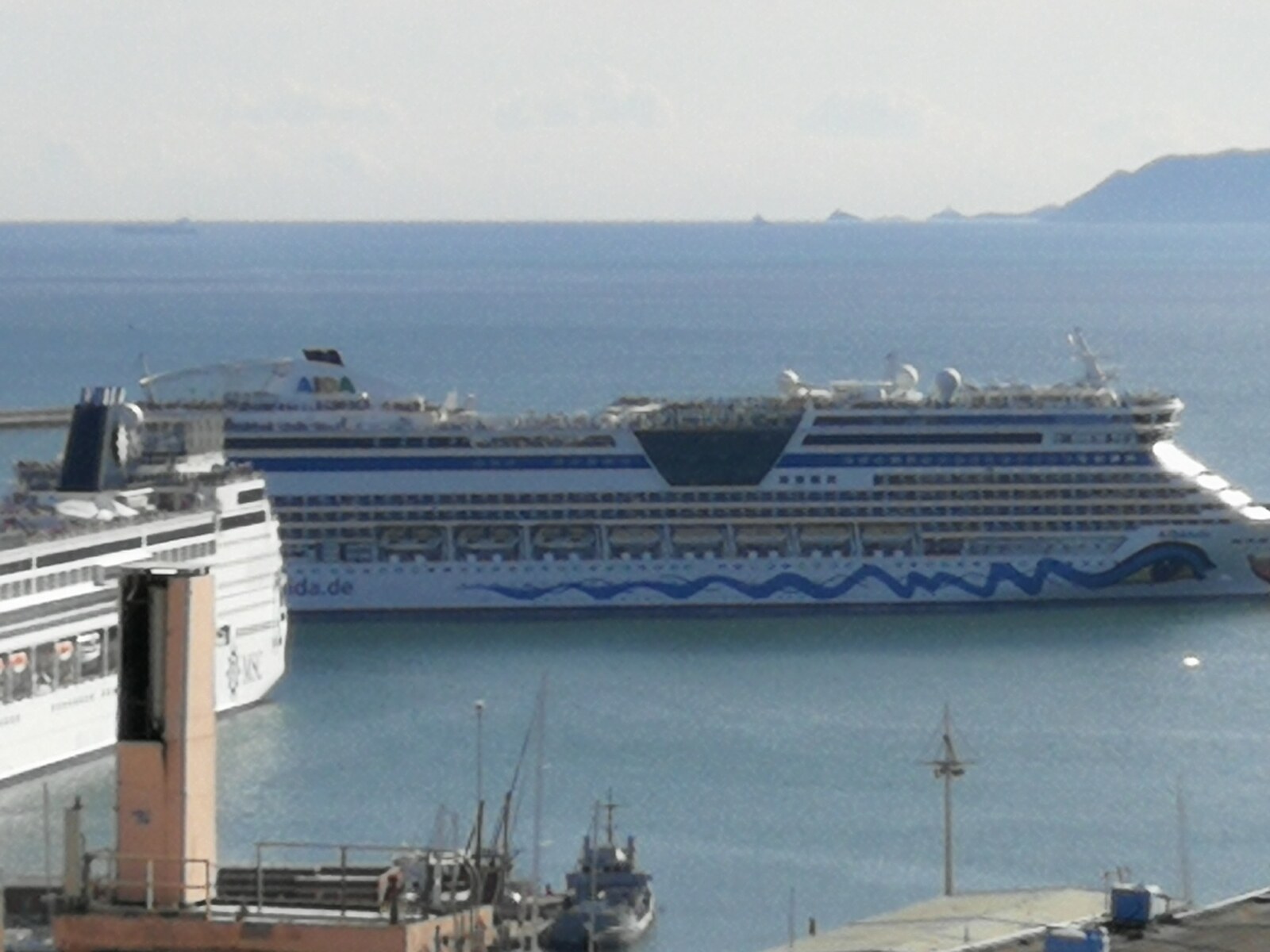
UNSEASONED, boardgame produced industrially in a single copy during a design course at IED Cagliari. Trailer frames, 2025. Synthetic image from HATERS(2024–2026). AIDA cruise ship in port (2017).