Data / Politics
Whose feed is authorised to move which body.
The field is not motion. The field is what happens when a stream published by a distant institution — a seismic bulletin, a news wire, a sentiment score — is permitted to move a physical object in a room. The chain is short: HTTPS, JSON, a stepper motor, a wall. The politics is in that shortness. Every artefact in the field asks the same question, under different lighting.
The photographs on this page are from a residency at Campidarte, in October 2025. Three devices shared the room. One read a feed and moved. One read a feed and wrote. One read a feed and sounded. None of them explained what the feed was for.
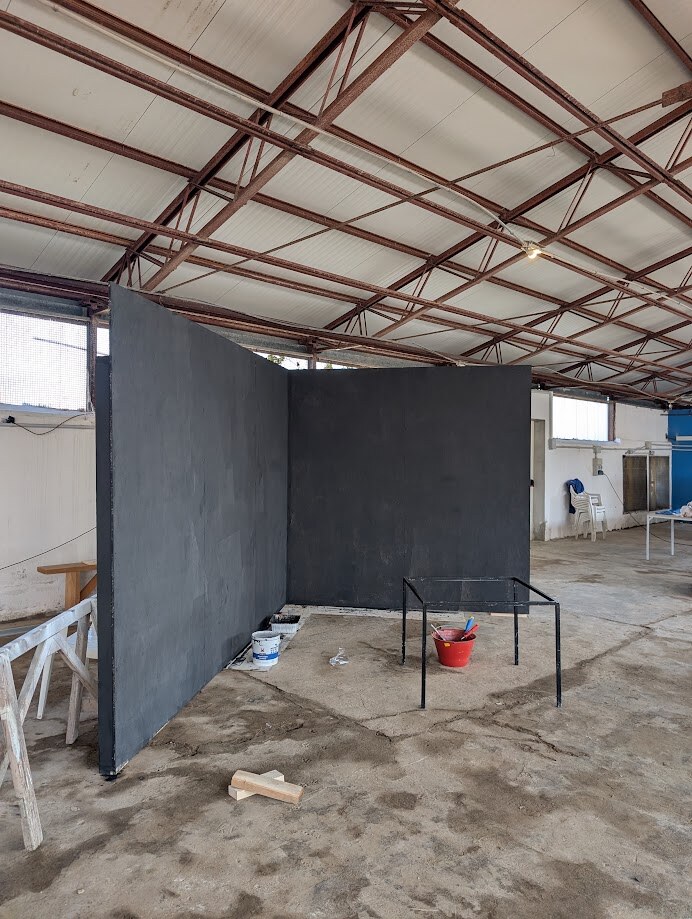
An earthquake off a coast the room will never see advances a wooden disc by ten centimetres. A wire feed edits its own tone through a rule-based scorer before commanding a direction. A local model, deliberately uncensored, rewrites a headline before it appears on a fullscreen kiosk. The chain of authorship is long. The final actor — the room — is silent. It only moves.
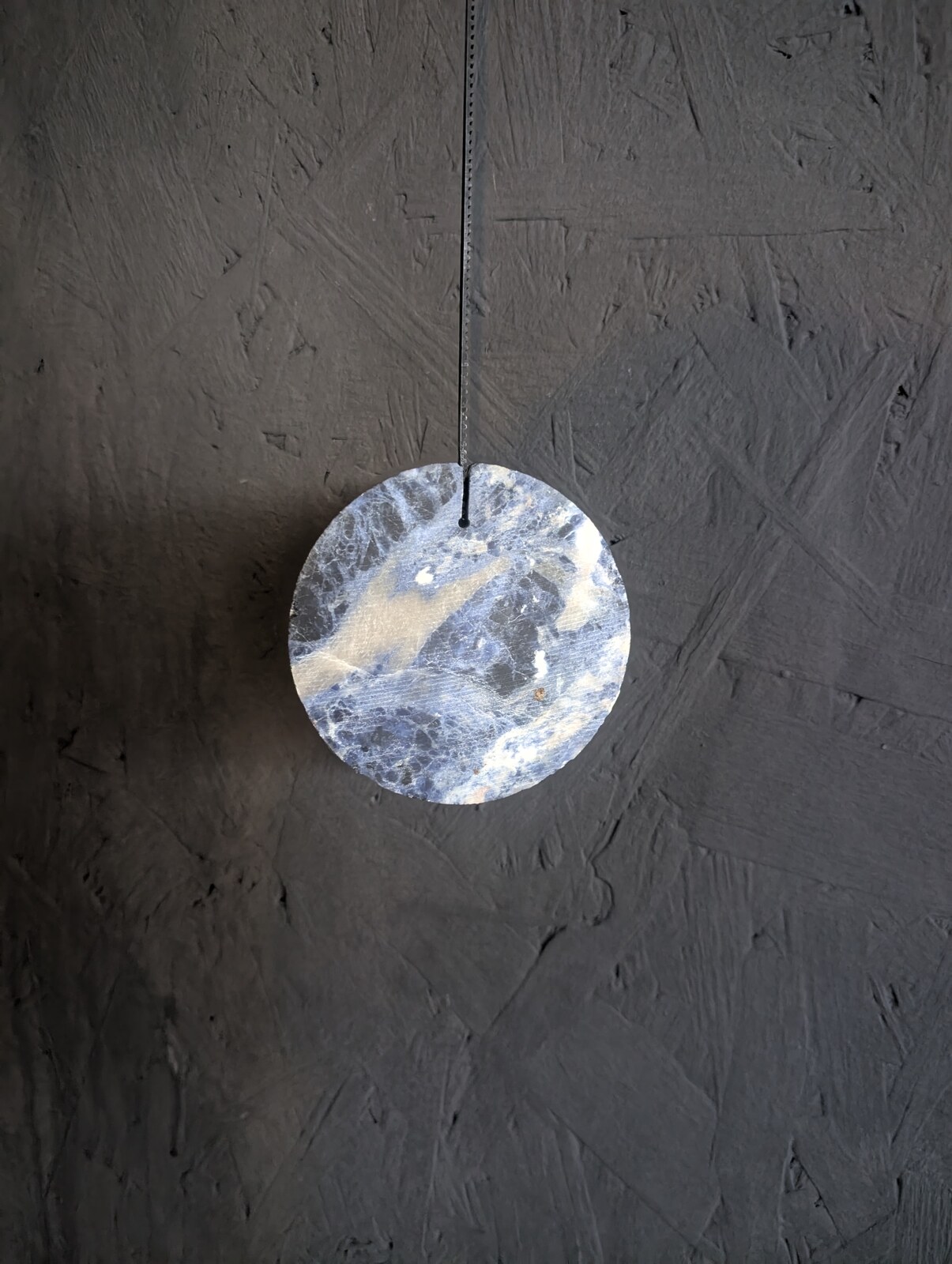
Hardware here is not fetish. It is syntax. The vocabulary is small and it repeats: microcontroller, driver, stepper, GPIO, cable, disc, wall. What matters is which reading a given piece of hardware performs on the feed — raw amplitude, sentiment polarity, symbolic residue. Morse code on a GPIO, dot one hundred fifty milliseconds, dash four hundred fifty, is a stance on what counts as a datum. So is a stepper that moves to an absolute position rather than a cumulative one.
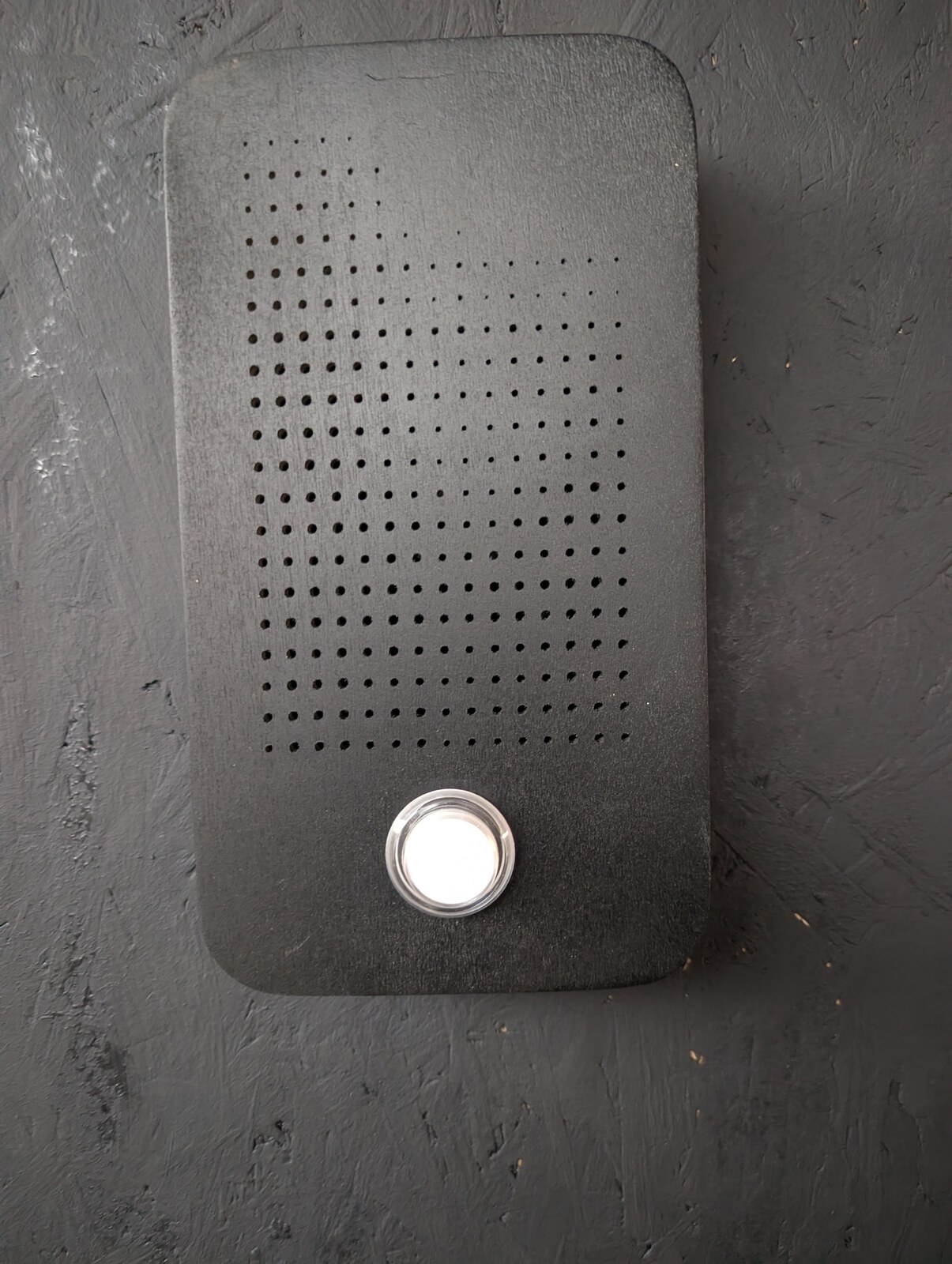
A stepper motor is a small foreign policy.
The discs are unmoved by the news of the world; they are moved by the news of the world. The distinction is not paradoxical — one is a matter of attitude, the other is a matter of watts, steps, and enable pins held high while the driver rests. Under ultraviolet the wooden face registers as another texture; on dark plaster, as another gravity. What the room feels is the ambient cadence of an external server that keeps publishing.
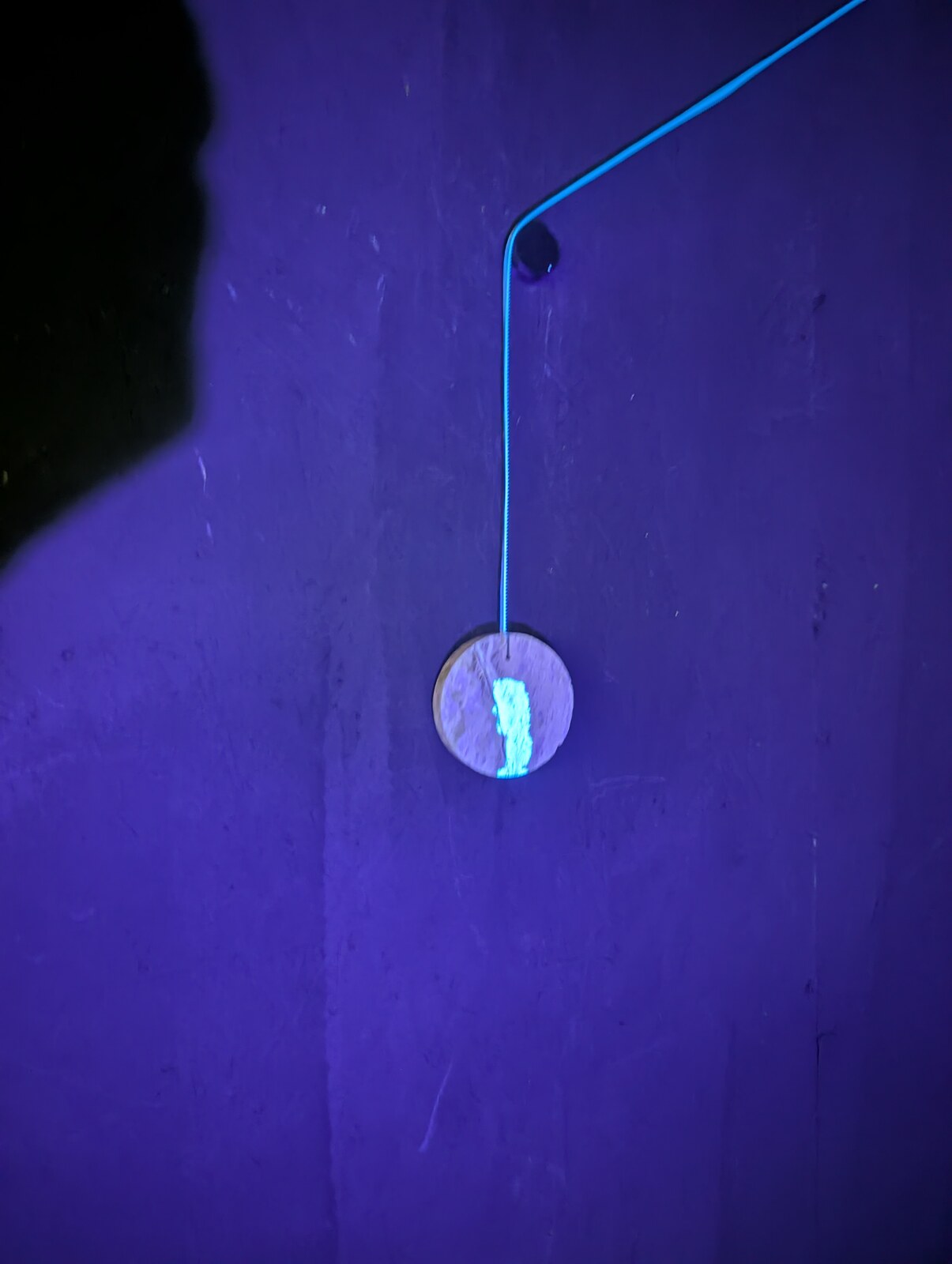
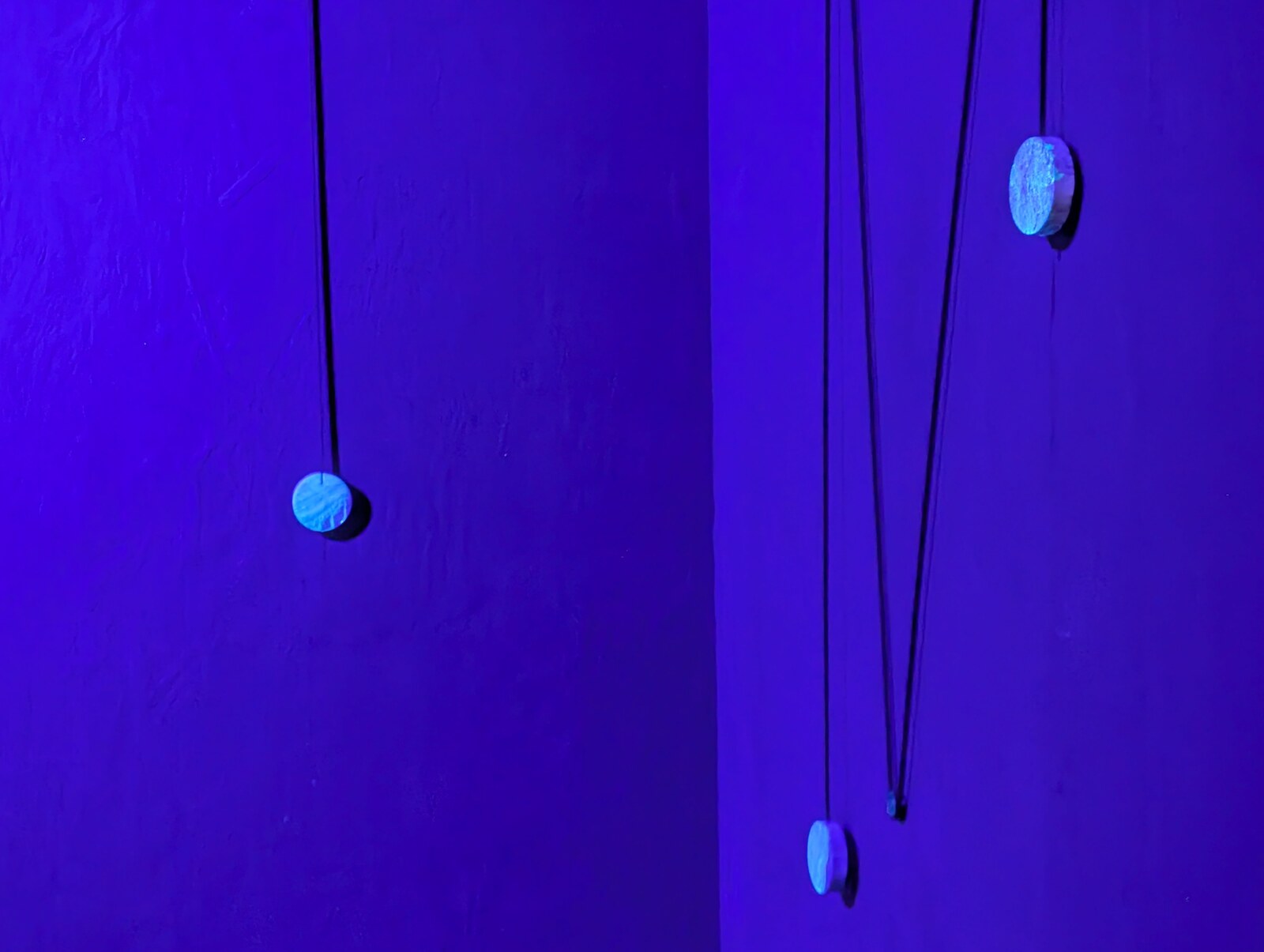
Somewhere upstream, an institution refreshes a file it will never watch. Somewhere downstream, a plaster wall records a movement no one asked it to remember. The room does not know which government maintains the server. The server does not know which room hosts the motor. In the middle sits a small piece of firmware that has been asked to hold two politics at once, and to keep quiet about it.
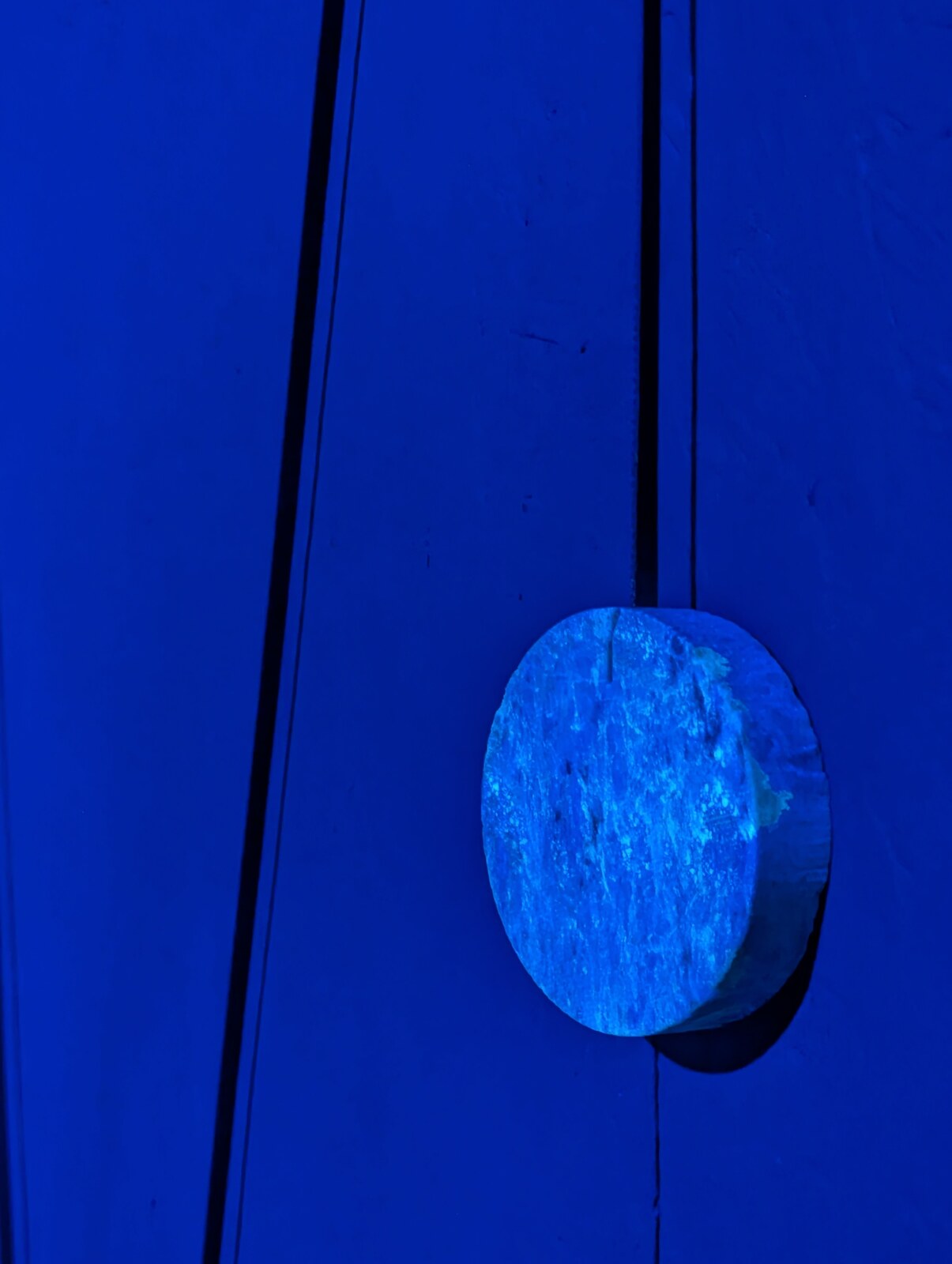
Installation made during a residency at Campidarte, October 2025 — three devices reading data across kinetics, text, and sound. Part of ongoing work within the CAMPIDARTE archive (2024–present): painted plywood discs, matte plaster walls, ESP32 / Arduino stepper drivers, DMX and UV lighting; feeds routed via HTTPS and serial protocols described elsewhere in the studio.